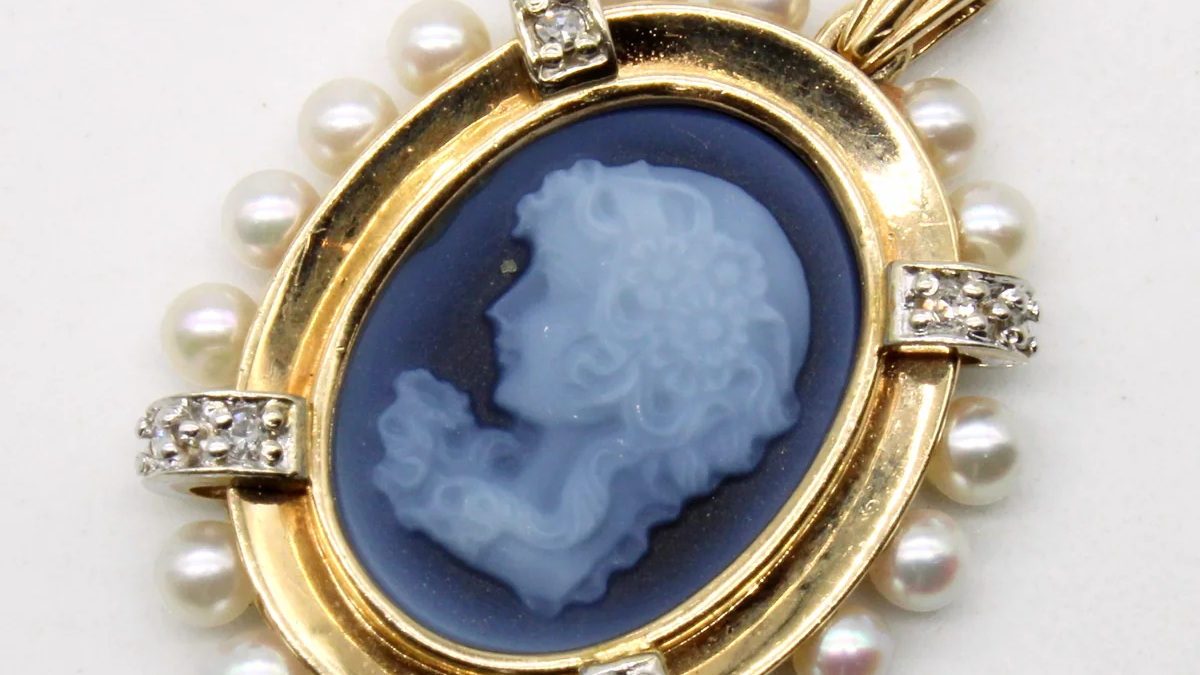
Cameo jewellery has been loved for centuries for its intricate designs and vintage appeal. It is known for its carved portraits and blends history with beautiful craftsmanship. From classic brooches to modern necklaces and rings, cameos remain an elegant choice for jewellery lovers today.
What is Cameo Jewellery?
Cameo jewellery is jewellery that displays a design carved in relief on a variety of materials such as stone, shells or even gemstones like sardonyx, onyx or agate.
Cameos can be seen as far back as 2000 years ago in Ancient Greece. However, the practice of carving designs into gemstones is much older and can be traced back to the ancient Egyptians.
Relief Carving
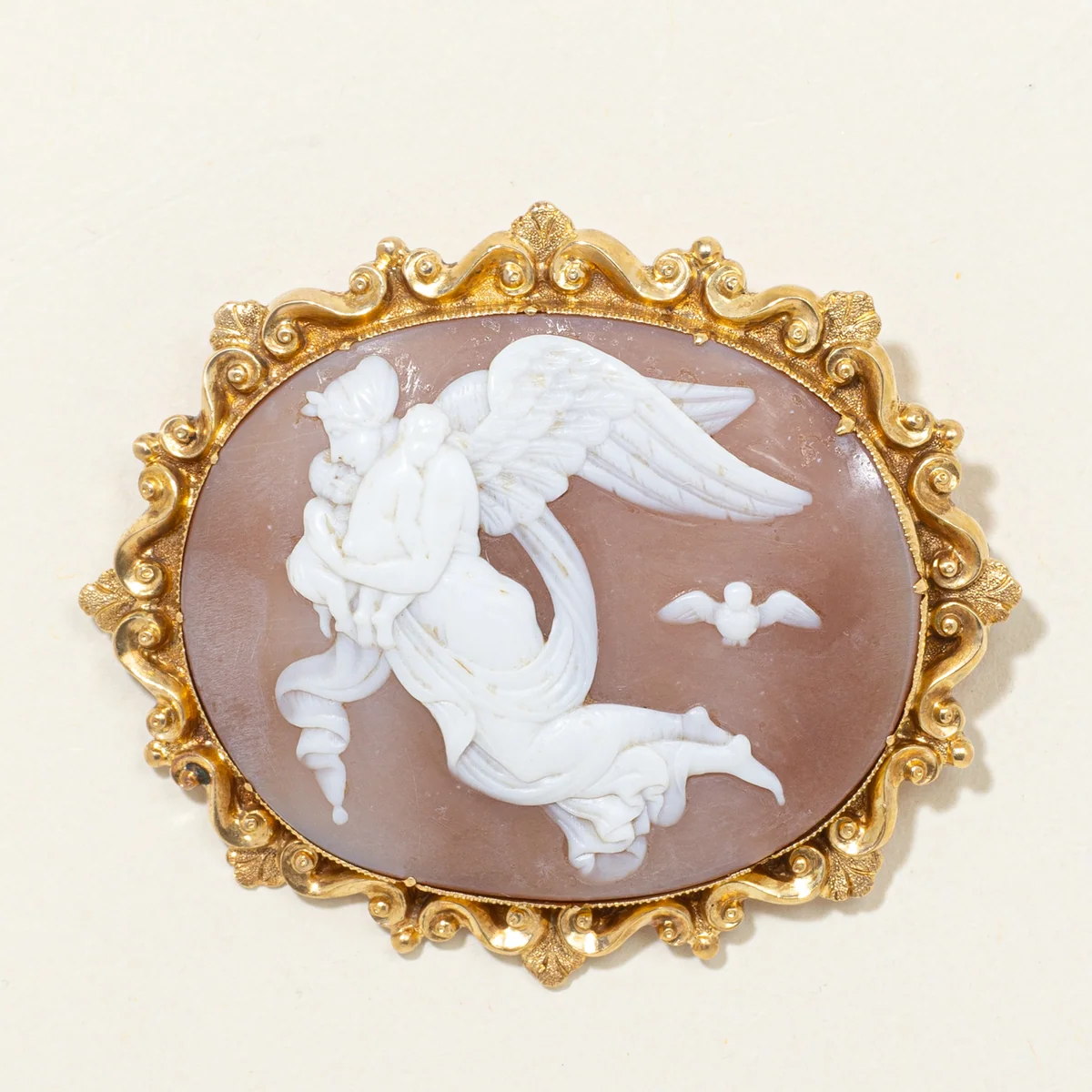 Vintage Cameo Brooch — 100 Ways
Relief carving is a technique where a design is carved into a material so that certain parts appear raised or recessed. The amount of depth in the carving can vary and creates different effects depending on the technique used.
There are several types of relief carvings:
- Low relief: The design sits slightly above the background, similar to an image on a coin.
- High relief: The design projects more prominently from the background and creates a stronger sense of depth.
- Sunken relief: The design is carved into the surface rather than raised above it.
- Shallow relief: The carving uses very subtle changes in depth to create fine details and the illusion of depth.
Cameo jewellery is most commonly associated with raised relief carving, (low or high) where the design stands out against the background. This technique allows carvers to create detailed portraits, figures and decorative patterns within a small space.
Timeline in History of the Cameo
Ancient Egyptians – Around 2000 BCE
Ancient Egyptian craftspeople were making detailed stone amulets and scarabs long before cameo carving became established in Ancient Greece. These were carved from materials such as jasper, amethyst, steatite and other stones and typically depicted sacred animals or hieroglyphs. As beautiful and intricate as these pieces were, they are not generally classified as cameos in the traditional sense. However, they may have helped lay the foundation for the development of cameo carving.
Ancient Greeks – Around 500 BCE
The emergence of cameos appeared around this time when Greek craftspeople began carving figures in raised relief on gemstones. These pieces often featured people and mythological scenes that showcased the skill and creativity of Greek artisans. These pieces were mainly displayed as decor rather than personal jewellery. This is the period generally associated with the development of cameos as an art form.
Ancient Romans – Around 100-1 BCE
In the Roman golden age, cameos became highly sophisticated. They often depicted emperors, mythological art or important historical figures. Cameos became valuable pieces of art and became more common as personal jewellery. The Romans also developed cameo glass which uses layers of differently coloured glass to imitate the appearance of layered gemstones.
The Renaissance – Around 1400-1600 CE
Cameo carving experienced a revival during the Renaissance as artists renewed their interest in ancient Greek and Roman art. These pieces were valued as decorative art among wealthy individuals because they connected their owners to the beauty and prestige of the ancient world.
Victorian Era – 1837-1901 CE
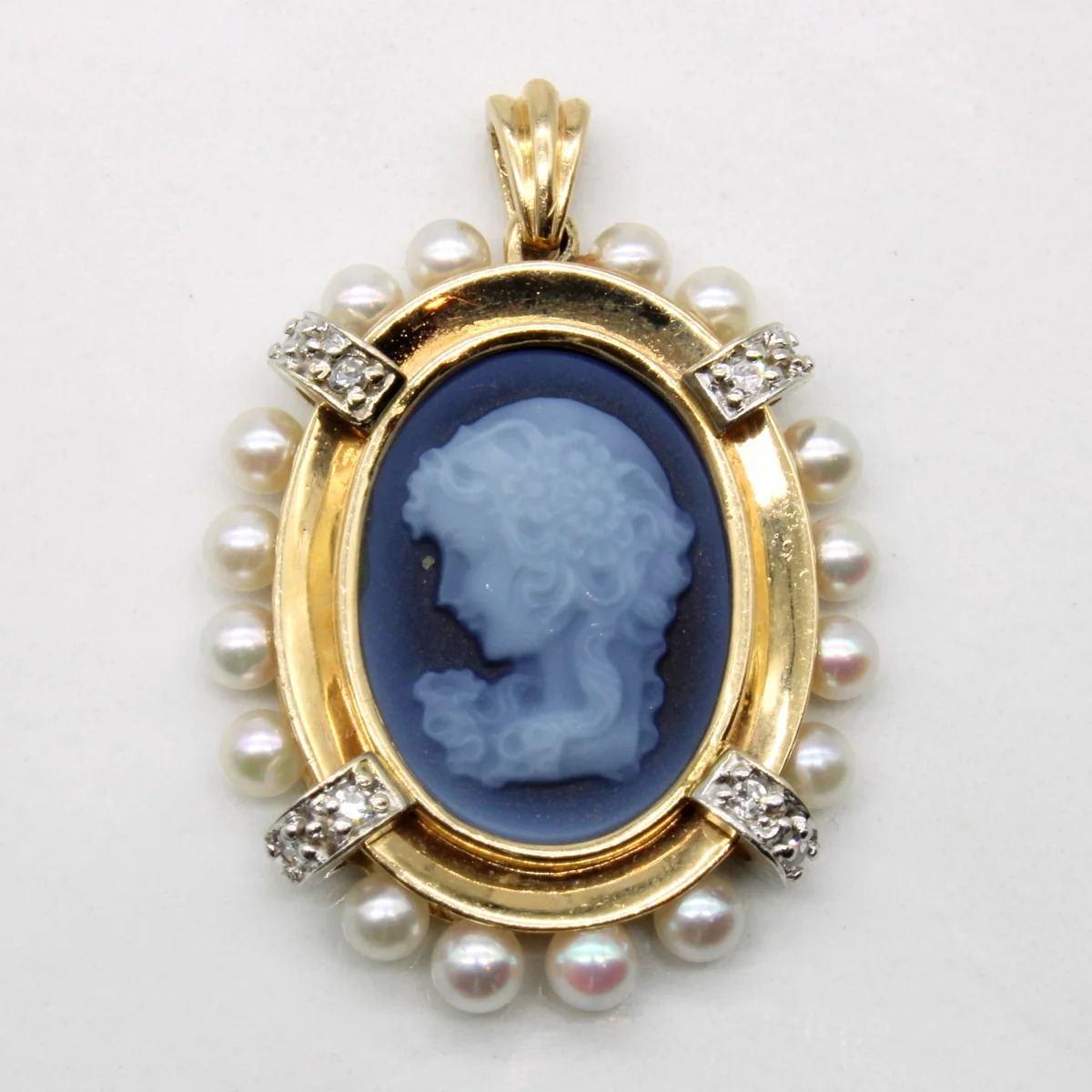 Blue Agate Cameo Pendant with Pearl & Diamond Accents — 100 Ways
Cameo jewellery became especially fashionable during the Victorian era, and it was worn as brooches, necklaces, earrings and other accessories. Gold and silver were often incorporated into the settings to frame the carvings and create bezels that held the cameos securely in place. Pearls and other gemstones were also occasionally added for extra decoration. Shell became very popular because it was easier and less expensive to carve than many hard gemstones, which made cameos accessible to a wider range of people. These pieces were important because they reflected Victorian fashion and social status.
Modern Day – 20th and 21st Century
Today, cameo jewellery continues to celebrate the timeless beauty of intricate carving and artistic craftsmanship. While traditional cameos are still hand carved from shells and gemstones, modern designs incorporate materials such as glass and resin and are often paired with precious metals like gold and silver. Cameos have also been spotted on celebrities in recent years, which helped bring this vintage style back into the fashion spotlight.
A Timeless Legacy
Cameo jewellery is rich in history and has evolved through time while reflecting the styles and traditions of each era. From ancient carvings to modern designs, cameos continue to capture the beauty of the past while remaining a treasured part of jewellery today.