
Gold and silver are usually discussed in terms of spot prices, premiums, and market conditions. But if you buy or sell physical precious metals in Canada, understanding how GST/HST and income tax apply is just as critical to protecting your investment.
At Canada Gold, transparency is our priority. Here is a straightforward overview of the key tax rules every Canadian precious metals buyer and seller should know.
Disclaimer: This article is for general information only and does not constitute tax, legal, or investment advice. For guidance specific to your situation, please consult a qualified tax professional or the Canada Revenue Agency (CRA).
Is There GST/HST on Gold and Silver?
In Canada, qualifying investment-grade precious metals are exempt from GST/HST. To qualify as a tax-exempt “precious metal” under the Excise Tax Act, a product must meet two strict criteria set by the CRA:
- La pureté : Gold and platinum must be at least 99.5% pure, and silver must be at least 99.9% pure.
- Form: The metal must be struck as a bar, ingot, coin, or wafer. Qualifying coins must be issued by a recognized government authority.
Bullion vs. Jewellery: The Tax Difference
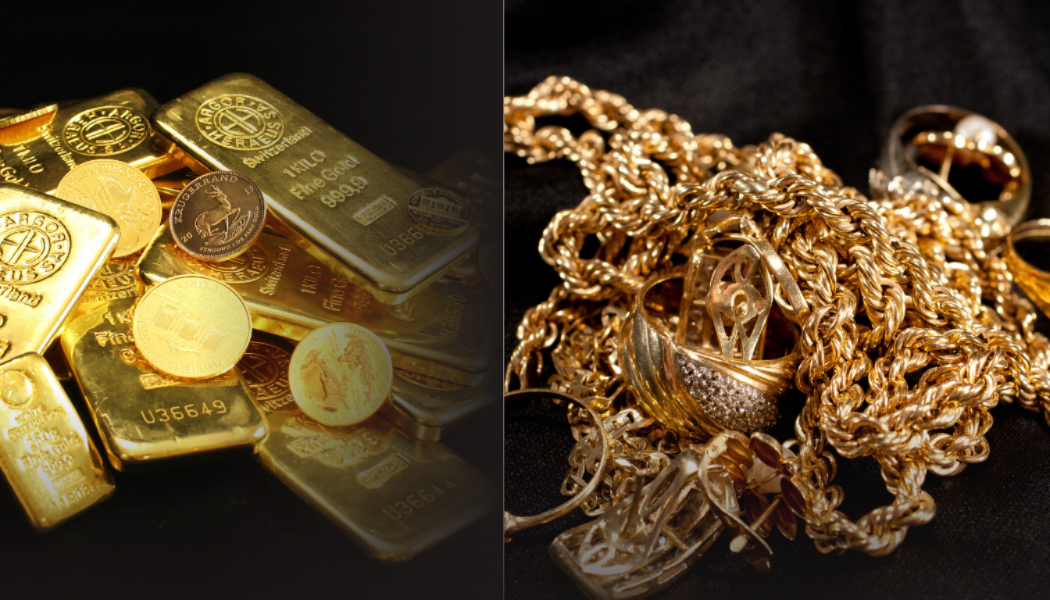
Because the CRA defines precious metals by both form and purity, standard gold jewellery is treated entirely differently than investment bullion.
For example, 14K gold is approximately 58.3% pure – falling well short of the 99.5% threshold. Because it fails both the purity and form tests, jewellery is taxed as a standard retail purchase.
| Product Type | Purity | GST/HST Status |
| Gold Maple Leaf Coin | 99.99% (24K) | Exempt (Zero-rated) |
| Silver Bullion Bar | 99.9%+ | Exempt (Zero-rated) |
| 22K Gold Bangle | 91.6% | Taxable (Full GST/HST) |
| 14K Gold Ring | 58.3% | Taxable (Full GST/HST) |
What Happens When You Sell?
When you sell bullion held as an investment, the profit is treated as a capital gain. If you sell it for less than your total cost, it triggers a capital loss.
Your Adjusted Cost Base (ACB) is the figure used to calculate this difference. Your ACB includes the original purchase price, plus eligible costs associated with acquiring the asset (like dealer premiums and shipping).
How Much is Taxable?
For Canadian individuals, the capital gains inclusion rate is 50%. This means only half of your net profit is added to your taxable income for the year. For example, if you realize a $5,000 capital gain on a gold sale, only $2,500 is added to your taxable income and taxed at your marginal rate.
Investor vs. Business Trading
The 50% capital gains rate applies to individuals holding metals as a long-term investment. However, if you buy and sell metals frequently, the CRA may classify your activity as a business.
The CRA looks at the frequency of your trades, the nature of your transactions, and your overall intent. If classed as a business, your profits are treated as business income and are 100% taxable. Active traders should consult a tax professional to clarify their status.
Record-Keeping Checklist
Good record-keeping ensures you don’t overpay taxes when it is time to sell. Whenever you purchase physical bullion, save the following documentation to establish your cost and ownership history:
- Purchase receipts and invoices
- Exact dates of all purchases and sales
- The breakdown of purchase prices and premiums
- Records verifying the weight and purity of the items
Buy and Sell with Confidence
Understanding taxes is just one part of mastering the precious metals market. At Canada Gold, we make the entire process transparent by clearly explaining purity, weight, premiums, and live market pricing.
Whether you are looking to secure your wealth with investment-grade bullion or sell gold, silver, and jewellery, our team is here to help you navigate the process.
Explore current pricing and secure your precious metals at canadagold.ca.



![[Ended] Canada Gold – Vancouver Coin Exchange 2026: FIFA World Cup 2026™ Commemorative Loonie](https://vancouvergold.ca/wp-content/uploads/2026/06/1-1080x675.png)